integrating Neuroarts
Rooted in principles from Neuroarts, neuroscience, and Yoga, the focus is not on fixing or performance—but on learning through lived experience and developing a more connected relationship with body and mind.
Learn through experience. Notice what shifts. Build awareness from within.
What is Neuroarts?
“Art must be life, it must belong to everyone” - Maria Abramovic
We believe in doing things differently—with intention, with passion, and with people at the center of it all. Neuroarts is an interdisciplinary field that explores how music, movement, visual art, storytelling, and other creative practices shape brain function, emotional regulation, and physical health.
Core principles of Neuroarts
Creativity changes the brain
Creative activity directly affects brain function, attention, emotion, and motivation.The brain learns through experience
Repeated sensory, movement, and creative experiences support neuroplasticity and adaptation.Learning is embodied
Body state—breath, posture, and sensation—shapes thinking, feeling, and behaviour.Emotion drives engagement
Aesthetic and emotional experience supports deeper learning and regulation.Multisensory input strengthens learning
Combining movement, sound, imagery, and touch enhances attention and memory.Creative activity supports regulation
Art and movement can shift nervous system states toward balance and flexibility.Meaning emerges through expression
Creative processes help organise experience and support reflection.Connection supports wellbeing
Shared creative activity strengthens social bonds and co-regulation.Participation matters more than skill
Benefits come from engaging in creativity, not from artistic ability.Integration strengthens outcomes
Combining arts, science, and lived experience creates more effective learning environments.
In Practice
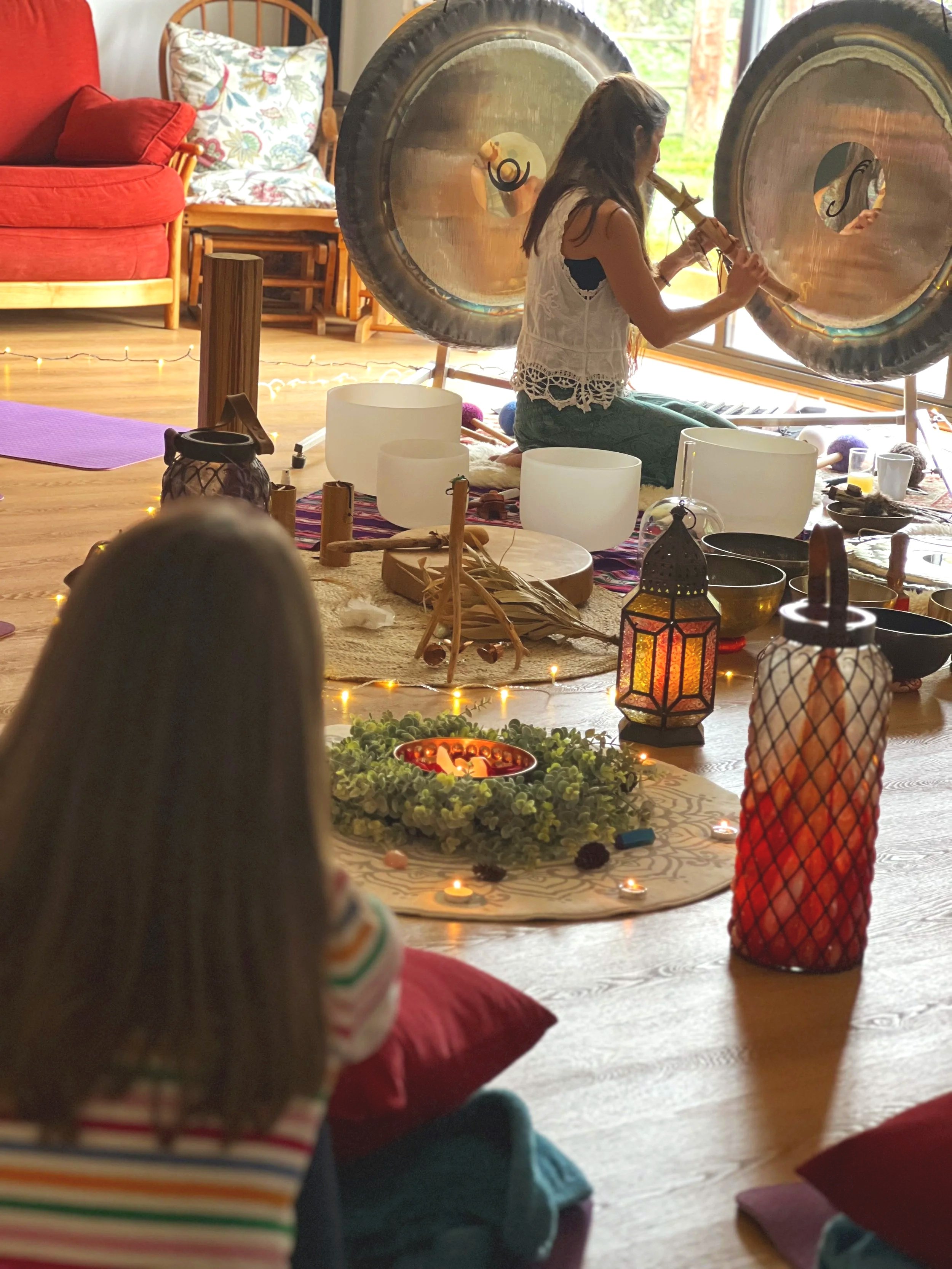
Across our programmes, sessions, and residentials, we weave together a range of elements. Sometimes the work leans toward creative exploration; at other times it is more structured. The balance shifts depending on the group, the environment, and what is needed in the moment.
At its roots, this work is about returning to what we already know supports us—yet may have drifted from or struggle to prioritise: connection, breathing, movement, and space for expression in our own way.
The intention behind these spaces is simple.
Yet creating time and permission for ourselves to pause, notice, and explore is often harder than it sounds.
Breath
Simple practices to notice shifts in attention, energy, and presence.
Movement
Gentle exploration of posture, sensation, and embodied awareness.
Creative Practice & Environment
Drawing, painting, writing, sound, or imagery as ways to explore experience and expression.
Reflection
Space to notice patterns, changes, and internal responses over time.